
Bug tracking where every bug gets a severity and an owner
Bugs come in from your forms and alerts, get a severity on a triage grid and go to the person or the coding agent who fixes them.
Prefer your own server? See self-hosted plans
Payment page times out on retry
- Severity
- Critical
- Found in
- 2.4.1
Is Eigenfocus a good bug tracker?
Yes. Bugs are issues with a Bug type, a triage workflow and fields like Severity and Found in version.
- A triage grid shows bugs by status and severity, with untriaged ones in their own row.
- Scripts, forms and error alerts create bugs through the REST API.
- Coding agents read and update bugs through the MCP server.
Where bugs slip through
"Bugs arrive everywhere."
Point your error monitor or bug form at the REST API. Every report becomes an issue in the same project.
"Nobody knows what's urgent."
Severity is a field on every bug, so the triage grid sorts them from Critical down.
"Old versions keep coming back."
Record the version a bug was found in and group a list by it before each release.
Triage on one grid
Status runs across. Severity runs down. Everything in the bottom row still needs a decision.
Drag a card from Remaining issues into a severity row to triage it. The field changes on the issue and every other view shows it.
How it works
A workflow for bugs
Use types like Bug, Regression and Feature request with statuses from New to Closed. Mark Closed as final so finished bugs land there.
- Labels for components like Checkout, API and Mobile
- A board filtered to bugs and regressions
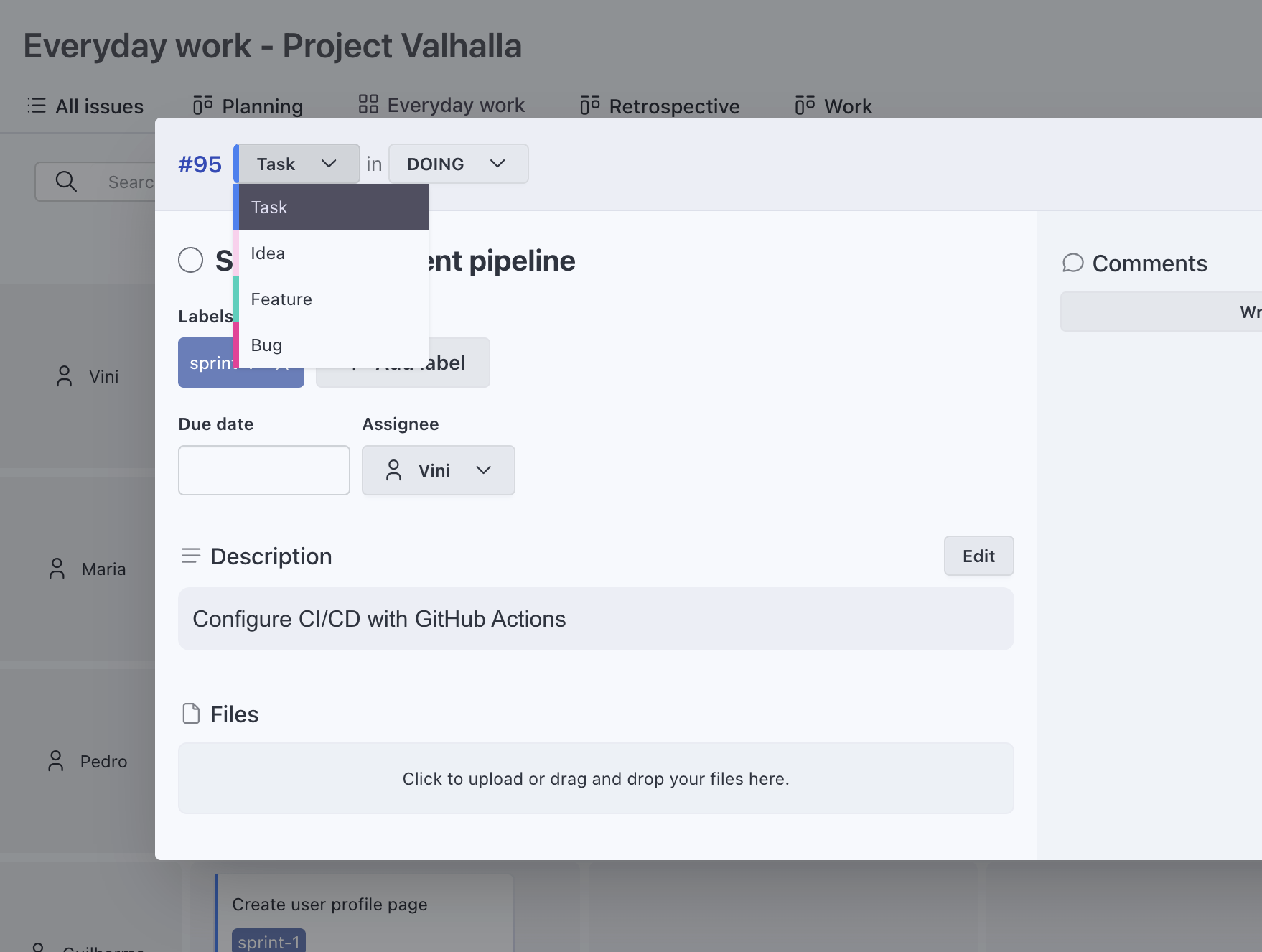
Severity, version and environment on the card
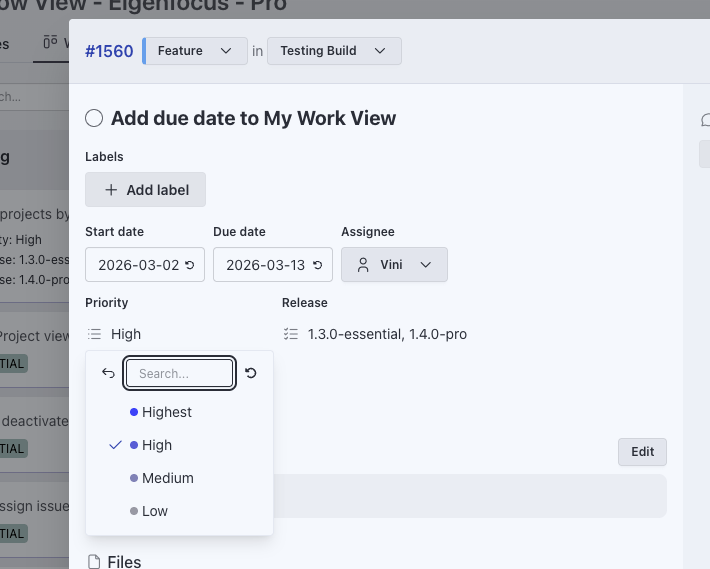
Add Severity and Found in version as select fields, Environment for production or staging and a URL field for the error link.
- Group a grid or board by severity
- Show the fields you need on each view
Reports that file themselves
A short script turns an alert or a form into an API call. The bug lands in New with its type, labels and fields set.
More about the REST API$ curl -X POST https://eigenfocus.example.com/api/v1/projects/12/issues \ -H "Authorization: Bearer $EIGENFOCUS_API_KEY" \ -H "Content-Type: application/json" \ -d '{"title": "Fix broken signup form", "assignee_id": 4}' { "id": 381, "title": "Fix broken signup form", "finished": false, "status": { "id": 1, "name": "To Do" }, "web_url": "https://eigenfocus.example.com/projects/12/issues/381", ... }
Fixes that start from the full bug report
Claude Code, Codex or Cursor read the bug through the MCP server with its severity, version and error link. When the fix is done they comment and move it to Fixed.
More about the MCP serverA week of bug work
Monday triage
Open the triage grid and give every card in Remaining issues a severity.
Release check
A list grouped by Found in version shows what's still open for the next release.
Customer-reported bugs
Support confirms a ticket is a bug and labels it customer-reported. It shows up on the triage grid.
Customer support ticket trackingOvernight alert
Your monitor posts a Critical bug overnight. The on-call person sees it in the Critical row first thing.
IT project managementKeep exploring
Frequently asked questions
Can bugs come in from our error monitoring or CI?
Can we track severity and versions?
Can our coding agent fix bugs from the tracker?
Can we self-host the bug tracker?
How much does the bug tracker cost?
Try it with your own projects
Flat price for your whole team. Cloud from $15/month or self-hosted.
Prefer your own server? See self-hosted plans